模型/原型
城際特快列車 2 型流線型列車
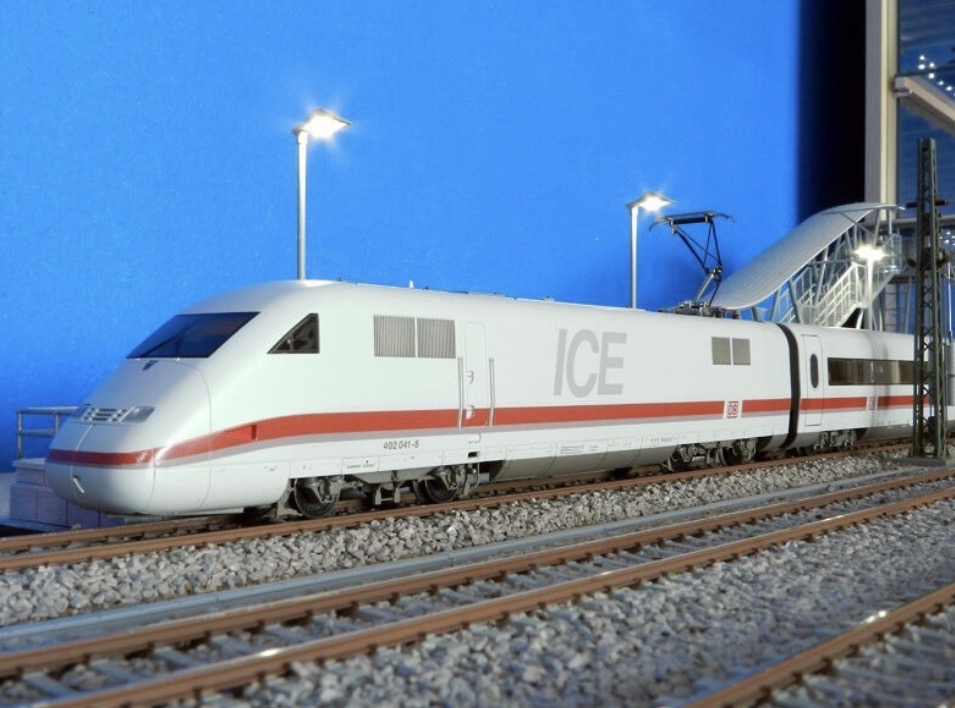
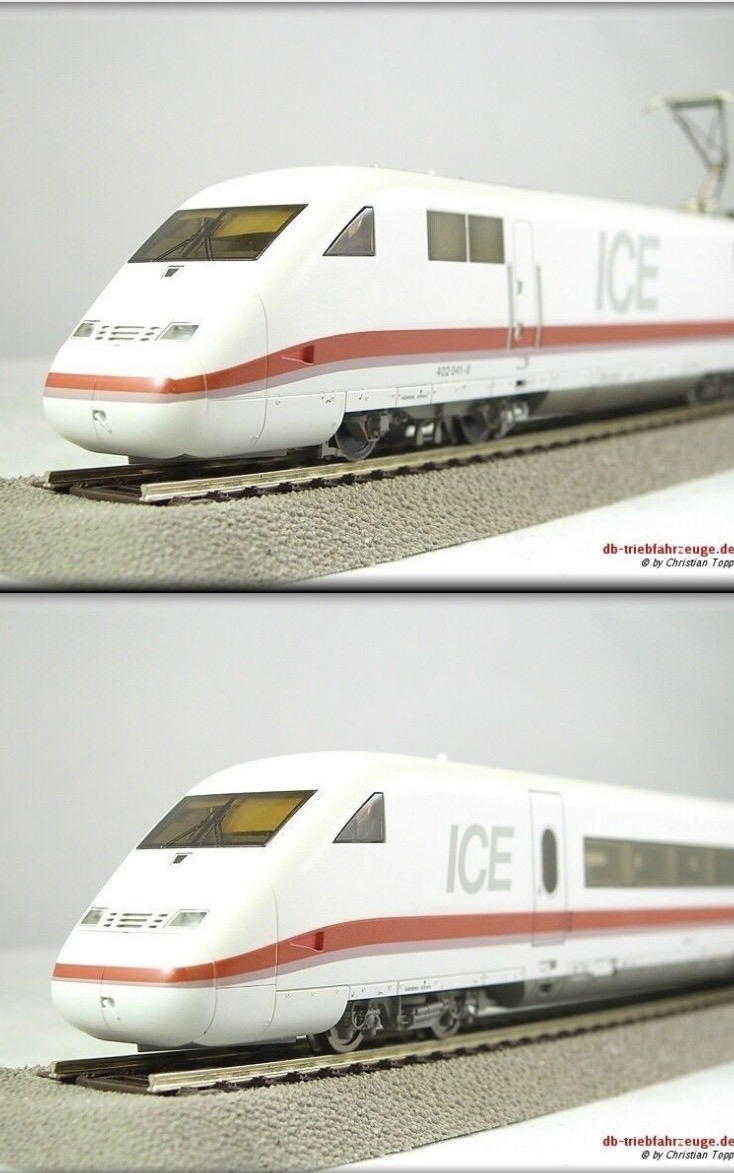
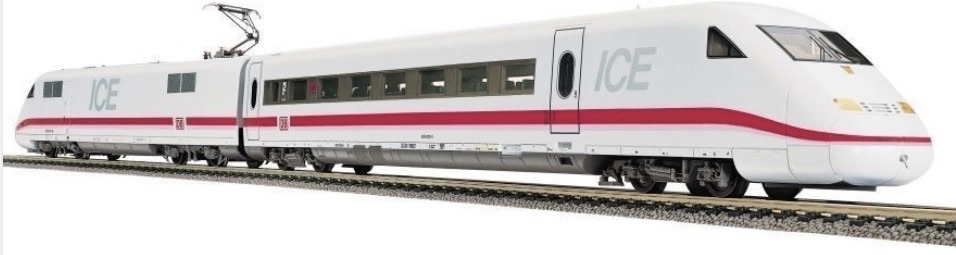
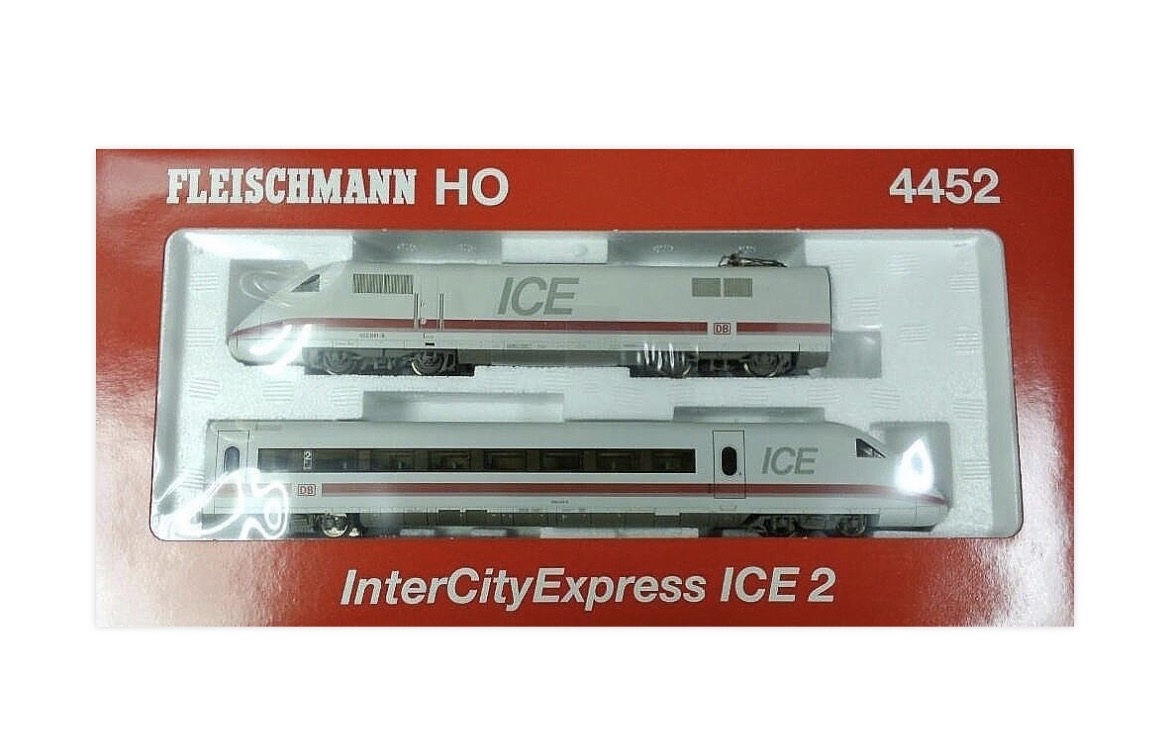
德國聯邦鐵路公司 (DB AG) 的弗萊施曼高速特快列車“ICE 2”
ICE 2 列車與控制車
HO 比例直流雙軌模型,附 6 針 DCC 接口
德國聯邦鐵路公司於 1985 年開始使用城際實驗列車(也稱為 ICE-V)進行一系列試驗。 IC Experimental列車曾被用作展示列車和高速試驗列車,並於1988年5月1日創造了406.9公里/小時(253英里/小時)的世界速度新紀錄。該列車於1996年退役,並被新型試驗列車ICE S取代。
經過德國聯邦鐵路公司和交通部就車載設備、列車長度和寬度以及所需列車組數量進行的廣泛討論,首批41列列車於1988年訂購。考慮德國統一,訂單於1990年增加至60列。然而,並非所有列車都能準時交付。
ICE高速列車網路於1991年5月29日正式啟用,多列車從不同方向匯聚到新建的卡塞爾-威廉高地車站。
首批ICE列車是ICE 1型列車組(動力車:401型),於1989年投入營運。首批ICE定期列車於1991年6月2日開通,路線為新建的ICE 6號線,從漢堡-阿爾托納出發,途經漢堡中央火車站、漢諾威中央火車站、卡塞爾-威廉高厄火車站、富爾達火車站、法蘭克福中央火車站、曼海姆中央火車站和斯圖加特中央火車站,最終抵達慕尼黑中央火車站。同年開通的漢諾威-維爾茨堡線和曼海姆-斯圖加特線也因此從一開始就被納入ICE網路。 1997年,由402型動力車牽引的ICE 2型列車作為ICE 1型的繼任者投入營運。 ICE 2型列車的目標之一是透過建造較小的列車組來改善負載平衡,這些列車組可以根據需要進行連接或分離。 ICE 1 和 ICE 2 列車的限界超過了國際鐵路聯盟 (UIC) 建議的標準。儘管這些列車最初僅供德國國內使用,但部分列車已獲得在瑞士和奧地利運行的許可。部分 ICE 1 列車配備了小型受電弓,以適應瑞士不同的架空電線幾何結構。所有 ICE 1 和 ICE 2 列車均採用 15 kV 交流電,這限制了它們的運行範圍,主要集中在歐洲的德語國家。
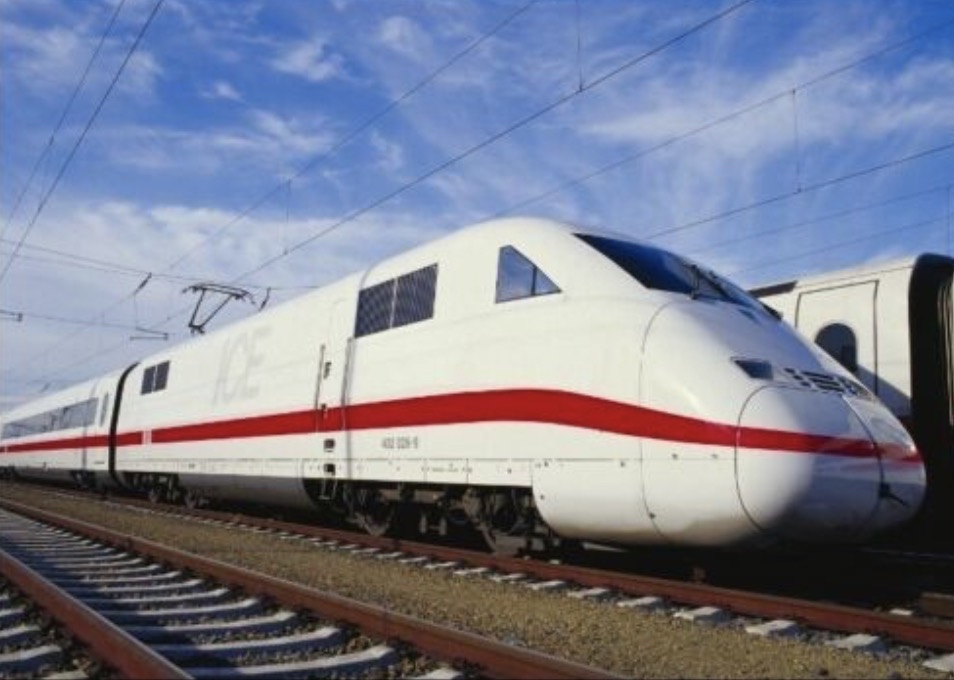
ICE 列車的一個顯著特點是其配色方案,該方案已由德國鐵路公司 (DB) 註冊為美學模型,並受智慧財產權保護。列車車身塗裝為淺灰色 (RAL 7035),並在車廂下部飾以交通紅 (RAL 3020) 條紋。連續的黑色車窗和橢圓形車門窗使 ICE 列車與其他德國鐵路公司的列車區分開來。
ICE 1 和 ICE 2 列車最初採用東方紅(RAL 3031)條紋,下方配以淡紫色條紋(RAL 4009,寬 26 公分)。 1998 年至 2000 年間,為迎接 2000 年世博會,所有 ICE 列車都進行了檢查和重新噴漆,這些條紋也被重新噴塗成現在的交通紅。
「ICE」字樣採用瑪瑙灰(RAL 7038)色,車架則採用石英灰(RAL 7039)色。車廂內部的塑膠飾板均採用淺灰色(RAL 7035)色。最初,ICE 1 的內裝設計採用柔和的粉紅彩色調,並以薄荷綠為主,遵循當時德國鐵路的配色。 ICE 1 列車在 2000 年代中期進行了翻新,如今採用了與 ICE 3 相同的設計,大量使用間接照明和木質內飾。
ICE 列車獨特的設計由亞歷山大·諾伊邁斯特 (Alexander Neumeister) 領導的設計團隊於 20 世紀 80 年代初開發,並首次應用於城際實驗列車 (ICE V)。隨後,諾伊邁斯特團隊又設計了 ICE 1、ICE 2 和 ICE 3/T/TD 列車。列車內部設計由斯圖加特 BPR-Design 公司的延斯彼得斯 (Jens Peters) 負責。他負責設計了餐車的高頂和特殊照明等。該團隊還在 1980 年代中期開發了現已停產的 InterRegio 列車的設計。
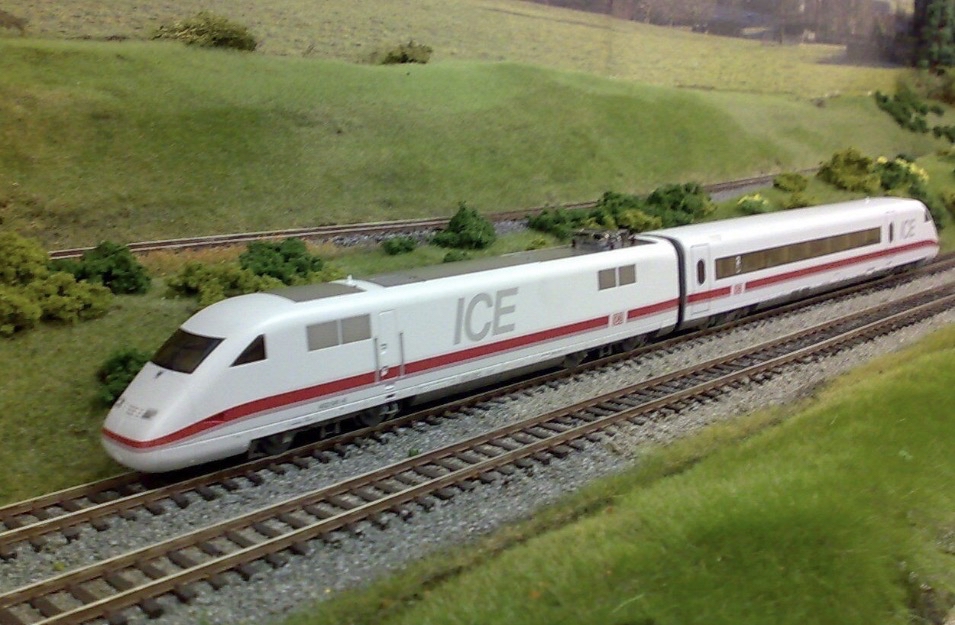
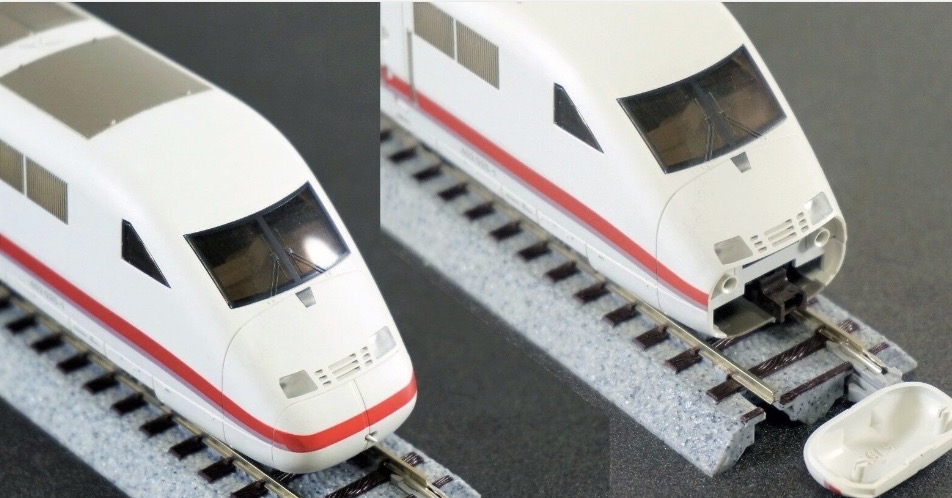
Fleischmann HO ICE2 模型在軌道上運行非常平穩且動力強勁。配有前轉向燈和後紅色尾燈
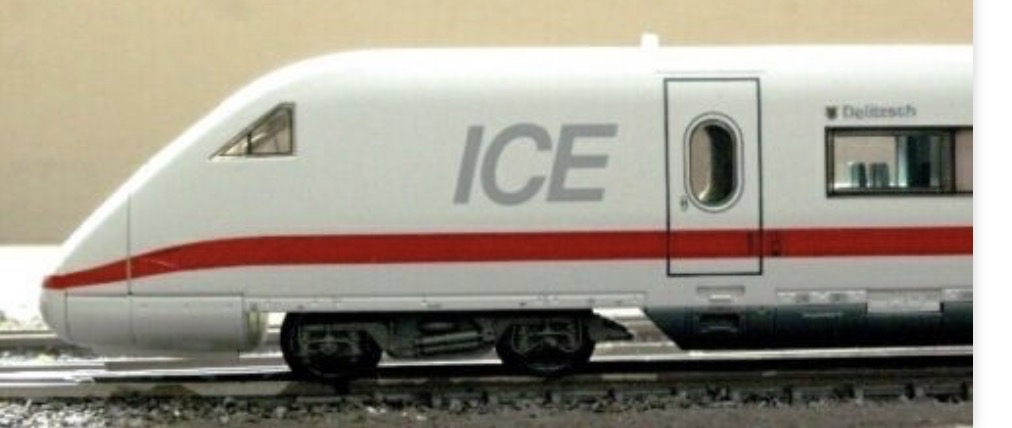
轉向架細節豐富
超精細
全新原廠盒裝 ~ Neu, unbespielt, originalverpackt
Model/Prototype
Inter-City-Express 2 Streamline Train
Fleischmann High Speed express train "ICE 2" of the DB AG
ICE 2 Triebkopf und Steuerwagen
HO-scale DC 2-rail with 6 pin DCC interface
The Deutsche Bundesbahn started a series of trials in 1985 using the InterCityExperimental (also called ICE-V) test train. The IC Experimental was used as a showcase train and for high-speed trials, setting a new world speed record at 406.9 km/h (253 mph) on 1 May 1988. The train was retired in 1996 and replaced with a new trial unit, called the ICE S.
After extensive discussion between the Bundesbahn and the Ministry of Transport regarding onboard equipment, length and width of the train and the number of trainsets required, a first batch of 41 units was ordered in 1988. The order was extended to 60 units in 1990, with German reunification in mind. However, not all trains could be delivered in time.
The ICE network was officially inaugurated on 29 May 1991 with several vehicles converging on the newly built station Kassel-Wilhelmshöhe from different directions.
The first ICE trains were the trainsets of ICE 1 (power cars: Class 401), which came into service in 1989. The first regularly scheduled ICE trains ran from 2 June 1991 from Hamburg-Altona via Hamburg Hbf – Hannover Hbf – Kassel-Wilhelmshöhe – Fulda – Frankfurt Hbf – Mannheim Hbf and Stuttgart Hbf toward München Hbf on the new ICE line 6. The Hanover-Würzburg line and the Mannheim-Stuttgart line, which had both opened the same year, were hence integrated into the ICE network from the very beginning. From 1997, the successor, the ICE 2 trains pulled by Class 402 powerheads, was put into service. One of the goals of the ICE 2 was to improve load balancing by building smaller train units which could be coupled or detached as needed. The ICE 1 and ICE 2 trains' loading gauge exceeds that recommended by the international railway organisation UIC. Even though the trains were originally to be used only domestically, some units are licensed to run in Switzerland and Austria. Some ICE 1 units have been equipped with an additional smaller pantograph to be able to run on the different Swiss overhead wire geometry. All ICE 1 and ICE 2 trains are single-voltage 15 kV AC, which restricts their radius of operation largely to the German-speaking countries of Europe.
A notable characteristic of the ICE trains is their colour design, which has been registered by the DB as an aesthetic model and hence is protected as intellectual property.The trains are painted in Pale Grey (RAL 7035) with a Traffic Red (RAL 3020) stripe on the lower part of the vehicle. The continuous black band of windows and their oval door windows differentiate the ICEs from any other DB train.
The ICE 1 and ICE 2 units originally had an Orient Red (RAL 3031) stripe, accompanied by a Pastel Violet stripe below (RAL 4009, 26 cm wide). These stripes were repainted with the current Traffic Red between 1998 and 2000, when all ICE units were being checked and repainted in anticipation of the EXPO 2000.
The "ICE" lettering uses the colour Agate Grey (RAL 7038), the frame is painted in Quartz Grey (RAL 7039). The plastic platings in the interior all utilise the Pale Grey (RAL 7035) colour tone. Originally, the ICE 1 interior was designed in pastel tones with an emphasis on mint, following the DB colour scheme of the day. The ICE 1 trains were refurbished in the mid-2000s, however, and now follow the same design as the ICE 3, which makes heavy usage of indirect lighting and wooden furnishings.
The distinctive ICE design was developed by a team of designers around Alexander Neumeister in the early 1980s and first used on the InterCityExperimental (ICE V). The team around Neumeister then designed the ICE 1, ICE 2, and ICE 3/T/TD. The interior of the trains was designed by Jens Peters working for BPR-Design in Stuttgart. Among others, he was responsible for the heightened roof in the restaurant car and the special lighting. The same team also developed the design for the now discontinued InterRegio trains in the mid-1980s.
Fleischmann HO ICE2 features very smooth and powerful running on rail. Comes with directional front light and rear red light
With highly detail bogie
Superdetail
Brand new in the original box ~ Neu, unbespielt, originalverpackt